

Why Promoting Your Best Waiter Doesn't Make Them a Great Restaurant Manager
It is one of the most common mistakes we make in hospitality. We take our best waiter, the one who knows every regular, sells the most wine, handles difficult guests brilliantly and can run a busy section without breaking a sweat, and promote them.
Congratulations. You’re now the restaurant manager. Here’s a set of keys, a bigger salary and a whole new collection of problems. Good luck!
The problem is that being an excellent waiter and being an excellent restaurant manager require very different skills. Yet we continue to promote talented people without adequately preparing them for the responsibilities that come with the job.
Having spent more than 30 years working in hospitality, I believe this is one of the industry’s most persistent mistakes, particularly when experienced managers are becoming increasingly difficult to find.
Great Service Doesn’t Automatically Mean Great Management
A good waiter knows how to deliver an exceptional guest experience. A good restaurant manager knows how to build a team that delivers that experience consistently, while ensuring the business operates profitably.
Suddenly, our newly promoted manager is expected to understand labour costs, rotas, budgets, stock control, recruitment, employment legislation and performance management. They’re also expected to motivate their team, handle difficult conversations and manage people who, until recently, were their colleagues and friends.
Yet how much preparation do we give them before handing over these responsibilities? In far too many cases, remarkably little.
Six months later, we’re disappointed because they’re struggling to control wages, avoiding difficult conversations or spending too much time serving guests rather than managing the business. Someone inevitably concludes that they were a brilliant waiter but simply aren’t management material.
But perhaps the problem isn’t the individual. Perhaps we simply haven’t prepared them properly.
Training Should Begin Before Promotion
This is where I believe hospitality gets things backwards. We wait until someone becomes a manager before teaching them how to manage, rather than making management development part of their progression through the business.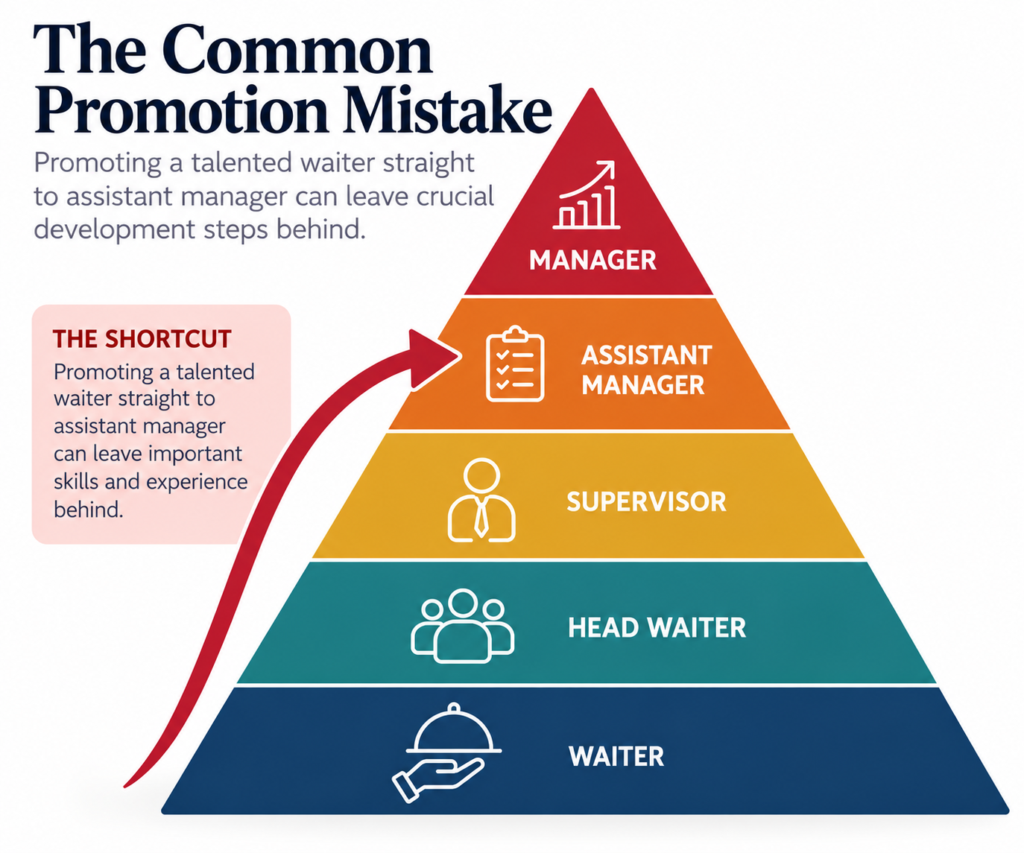
Why shouldn’t junior waiters begin to understand how a restaurant makes money? Why shouldn’t supervisors learn about labour costs, profitability and leadership? Why shouldn’t assistant managers be involved in reviewing financial performance and making commercial decisions before taking responsibility for an entire restaurant?
Developing these skills doesn’t mean overwhelming junior employees with management theory. It means gradually introducing them to the commercial and leadership responsibilities they will need as their careers progress.
A restaurant manager doesn’t need to be an accountant, but they should understand how their decisions affect profitability. Equally, being popular with colleagues is not the same as knowing how to lead them. Both commercial awareness and leadership skills need to be taught, practised and developed.
Preparing the Next Generation of Managers
I’ve worked with some outstanding restaurant managers during my career, many of whom started as waiters. I was one of them, but I didn’t become a better manager simply because I was good at service. I developed because experienced people invested their time and knowledge in helping me understand the wider responsibilities of running a restaurant.
That experience has shaped the way I approach hospitality training today. I believe we should be identifying potential managers much earlier, giving them opportunities to develop their commercial understanding and leadership skills, and preparing them for promotion rather than expecting them to learn through expensive mistakes afterwards.
Internal promotion should be encouraged, but it needs to be supported by proper development. The benefits are considerable: more confident managers, stronger teams, better staff retention and ultimately, more profitable restaurants.
Perhaps the problem isn’t that we’re promoting the wrong people. Perhaps it’s that we’re not preparing the right people.
At Harris Restaurant Consultants, we help hospitality businesses develop their existing management teams and prepare future leaders through practical training, mentoring and commercial development.
If you would like to discuss how we can help strengthen your restaurant management team, get in touch.
For advice about your restaurant please contact Restaurant Consultant Mark Harris
Get in touch